You have no items in your shopping cart.
96
RVF
RVF
96
JS
JS
98
TDV
TDV

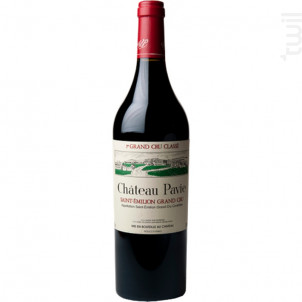
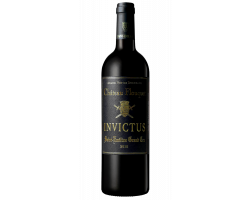
Photo for illustration purposes only. Vintage sold: 2021


-
 Grand Cru classé
-
 Légende



Stock out
In a few words ...
"pavie is one of the best wines in the world today", says robert parker in his tasting of the 2000 vintage. In the 4th century, the ausone and pavie hillsides were the region's first vineyards. On the plots we know today grew fruit called "pêche pavie", a name later given to the château. In 1873, Fernand Bouffard bought the estate and several small neighboring properties. On his death in 1919, Albert Porte brought together almost all the neighboring vineyards to form Château Pavie. Bought by the Valette family in 1943, the château became premier grand cru classé b in the first Saint-Emilion wine classification of 1955. After more than half a century of work, the family sold the estate in 1998 to Gérard Perse, who arrived with an ambitious project. Within a year, he had achieved his goals by replanting parcels in poor condition, modernizing the winery and bringing in michel rolland, a renowned Bordeaux wine expert. As early as the 2000 vintage, the American critic robert parker gives the château a top score of 100/100: "pavie is now one of the best wines in the world". Fourteen years of hard work by the Persian family were rewarded in the new 2012 classification, when the estate became premier grand cru classé "a". With Château Angélus, Pavie joins the elite of the Libourne region, which already includes Châteaux Cheval Blanc and Ausone. Facing due south, the vineyard enjoys exceptional conditions, conducive to meticulous viticulture, with naturally poor soils, excellent sunshine and natural drainage due to the slope. With a very chalky terroir specific to Saint-Emilion, and in particular to the pavie hillock located 85 meters above the Dordogne river, the vineyard is predominantly planted with Merlot. Cabernet franc also thrives on this type of soil, but the château stands out for its high proportion of Merlot.

Tasting notes
Appearance
Ruby hue, with purplish reflection in youth.
Aroma
The notes of red fruits are very concentrated, behind them develop a wide range of aromas including vanilla and leather with aging in barrels.
Wine Fruity | Spicy
Taste
The three main varieties of the appellation come together and complement each other to magnify the whole. Merlot brings fruity, when Cabernet Sauvignon gives tannins and Cabernet Franc spicy notes.
Wine Fruity | Long
Product details
Keeps
20 years
Peak
-
Service
17°C
Grape varieties Cabernet-franc, Cabernet-sauvignon, Malbec, Merlot
Terroir Gravel clay and sand on the surface and deep iron oxides. The climate is continental, which is supported by the presence of two rivers, the Dordogne and the Isle.
Culture type
-
Alcohol
14%
Content
75cl
Decanting
30 min.
Food and wine pairings
Starters
Saffron scallop
Meat
Red meats, game
Guides reviews
96 / 100 La Revue du Vin de France
96 / 100 James Suckling
98 / 100 Terre de vins
Customer reviews
Have you tasted it?
Review this item
Château Pavie
Château Pavie is a domain from the region Bordeaux in France, that produces 39 wines available to purchase, including the wine Château Pavie 2021.
Appellation
Saint-Émilion Grand Cru
The appellation Saint-Émilion Grand Cru is part of the region of Bordeaux from France which include Château Pavie and its 34 cuvées. Spread over 80% red wines, but also 11% white wines, 9% rosé, this region is 6 million hectolitres per yer (80% red wines + white wines (dry, sweet and fortified), clairet and crémant rosés).
See appellation page
Saint-Émilion Grand Cru : most popular


 TWIL - Achat de Vin